Saying “good luck and farewell” is grammatically correct, but whether it sounds natural depends on the situation, relationship, and tone you want to express.
Many English speakers understand the phrase immediately because both parts communicate positive wishes for someone who is leaving.
However, the combination can sometimes sound more formal, dramatic, or final than everyday English requires.
If you are wondering “is it correct to say good luck and farewell,” the answer is yes, but it is not always the most common or natural choice in modern conversations.
Native speakers often choose alternatives such as “good luck with everything,” “farewell and best wishes,” or “good luck in your next chapter,” depending on whether the situation is professional, emotional, casual, or permanent.
This article explains what “good luck and farewell” means, how English speakers interpret it, when it works well, when it may sound awkward, and which alternatives may better match your intended message.
Is It Correct to Say “Good Luck and Farewell”?
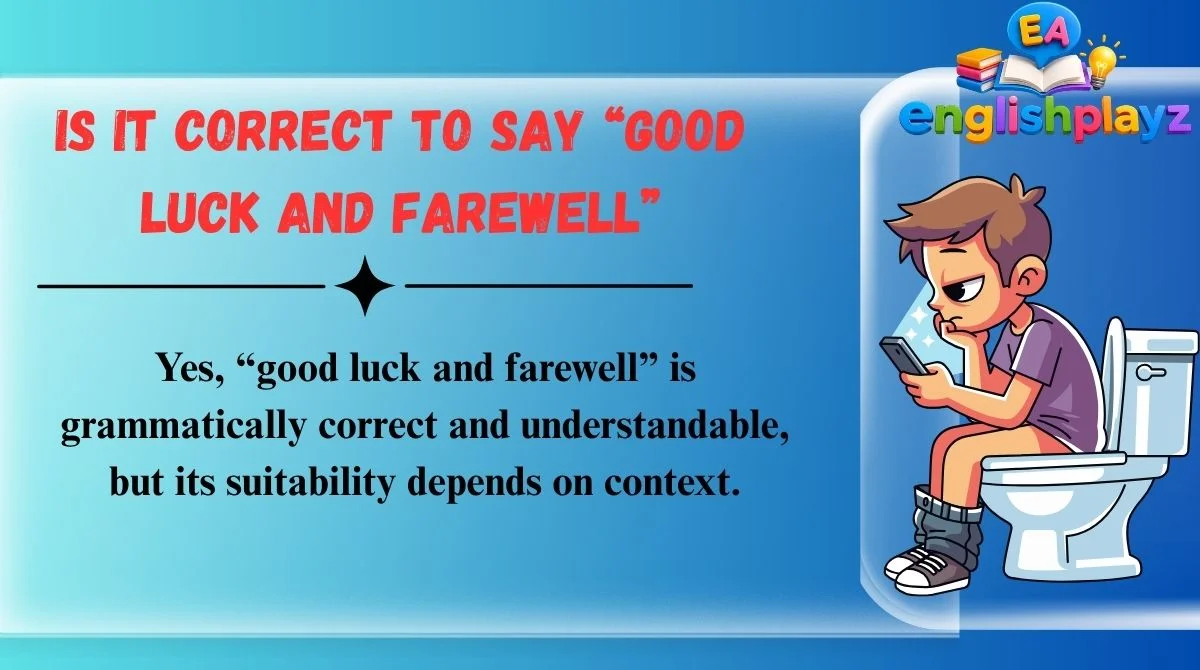
Yes, “good luck and farewell” is grammatically correct and understandable, but its suitability depends on context. It combines a wish for future success (“good luck”) with a formal goodbye (“farewell”). The phrase sounds polite and respectful, but it can feel slightly formal or ceremonial compared with everyday expressions like “good luck and take care” or “wishing you all the best.”
What Does “Good Luck and Farewell” Mean?

The expression “good luck and farewell” contains two separate ideas:
- Good luck means you hope someone has success, happiness, or positive experiences in the future.
- Farewell means goodbye, especially when someone is leaving or when the separation may be long-lasting.
Together, “good luck and farewell” means:
“I wish you success and happiness as you leave. Goodbye, and I hope things go well for you.”
The phrase is often used when someone is moving on from a situation, such as:
- leaving a job
- graduating
- moving to another country
- ending a professional relationship
- saying goodbye to someone beginning a new stage of life
For example:
- “Good luck and farewell as you begin your new career overseas.”
This sentence is clear and polite. It expresses both encouragement and goodbye.
However, the emotional meaning can vary. In some contexts, “farewell” suggests a more serious or permanent goodbye than simply saying “bye” or “see you later.”
Compare these:
- “Good luck and farewell.”
→ Formal, respectful, possibly final. - “Good luck and see you soon.”
→ Friendly and suggests future contact. - “Good luck and take care.”
→ Warm and natural for everyday use.
Is “Good Luck and Farewell” Grammatically Correct?
From a grammar perspective, “good luck and farewell” is correct.
The structure uses a conjunction (and) to connect two coordinated expressions:
- good luck = noun phrase expressing a wish
- farewell = noun used as a goodbye expression
The word “and” joins two related messages:
- a positive wish for the future
- a goodbye message
Similar structures include:
- “Congratulations and best wishes.”
- “Thank you and goodbye.”
- “Peace and happiness.”
- “Success and good fortune.”
There is no grammatical rule preventing “good luck” and “farewell” from appearing together.
However, grammar alone does not determine whether a phrase sounds natural. English speakers also consider tone, context, and common usage.
For example:
- Correct and natural:
“Good luck and farewell. I hope your new journey brings you success.” - Grammatically correct but slightly formal:
“Good luck and farewell on your future endeavors.” - Less natural in casual conversation:
“Good luck and farewell, buddy. See you tomorrow.”
The last example sounds unusual because “farewell” creates a serious tone while “see you tomorrow” suggests a temporary goodbye.
How Natural Does “Good Luck and Farewell” Sound to Native English Speakers?
Native speakers generally understand the phrase, but many would consider it more formal than conversational.
In everyday English, people often say:
- “Good luck!”
- “Best of luck!”
- “Take care!”
- “All the best!”
- “Wishing you the best!”
- “Good luck with your next adventure!”
“Farewell” is not incorrect, but it is less common in ordinary speech. It often appears in:
- speeches
- retirement messages
- graduation ceremonies
- written announcements
- emotional goodbye messages
- literary or dramatic writing
For example:
Natural in a retirement speech:
“After 30 wonderful years with this company, we say farewell and wish you good luck in your retirement.”
Less natural in a quick workplace chat:
“Good luck and farewell. Your meeting starts at 2 p.m.”
The second example feels too formal for the situation.
The key distinction is:
- Grammatically correct: Yes.
- Common in everyday conversation: Not usually.
- Appropriate in formal or meaningful goodbyes: Often yes.
Is “Good Luck and Farewell” Polite or Too Formal?
The phrase is polite, but its level of formality depends on the relationship and situation.
When it sounds polite and appropriate
“Good luck and farewell” works well when you want to show respect, appreciation, or emotional support.
Examples:
- “Good luck and farewell as you retire from your teaching career.”
- “We wish you good luck and farewell as you move to your new position.”
- “Good luck and farewell. Thank you for everything you have done for our team.”
These examples sound respectful because the goodbye is meaningful.
When it may sound too formal
In relaxed situations, “farewell” may feel overly serious.
For example:
- “Good luck and farewell. See you at lunch tomorrow.”
Although correct, it sounds strange because “farewell” suggests a longer separation.
A more natural version:
- “Good luck and see you tomorrow.”
The phrase is not rude, but it may create more emotional distance than you intend.
Professional and Workplace Usage of “Good Luck and Farewell”
In professional communication, “good luck and farewell” can be appropriate, especially when someone leaves a company, retires, changes careers, or moves away.
It is often better suited for written communication than casual workplace speech.
Examples:
Professional email:
“Thank you for your dedication and hard work over the years. Good luck and farewell as you begin this exciting new chapter.”
Team announcement:
“We would like to wish Sarah good luck and farewell as she leaves our organization for a new opportunity.”
However, many workplaces prefer warmer and more modern wording:
- “We wish you all the best in your future endeavors.”
- “Good luck in your new role.”
- “Thank you for your contributions, and we wish you continued success.”
“Farewell” can sometimes sound like a permanent departure, so consider whether that matches the situation.
Using “Good Luck and Farewell” in Emails and Written Messages
Written communication allows more formal expressions than spoken conversation, so “good luck and farewell” is often more acceptable in emails, cards, and letters.
It can work well in:
- farewell emails
- retirement messages
- graduation notes
- appreciation letters
- goodbye cards
Examples:
- “Good luck and farewell. Your kindness and professionalism will be greatly missed.”
- “As you leave for your new opportunity, we wish you good luck and farewell.”
- “Good luck and farewell on this exciting new journey. We hope you achieve everything you are working toward.”
However, if writing to a close friend or colleague, you may want a warmer expression:
- “Wishing you all the best.”
- “Good luck with everything ahead.”
- “Take care, and I hope our paths cross again.”
The best wording depends on whether you want to sound formal, affectionate, respectful, or casual.
When Should You Avoid Saying “Good Luck and Farewell”?
Although correct, there are situations where another phrase would sound more natural.
Avoid using it when:
1. The goodbye is temporary
If you expect to see someone again soon, “farewell” may sound too final.
Less natural:
“Good luck and farewell. See you next week.”
Better:
“Good luck, and see you next week.”
2. The situation is casual
Among friends, “farewell” can sound theatrical.
Less natural:
“Good luck and farewell, mate!”
Better:
“Good luck and take care!”
3. The person is not actually leaving
“Farewell” suggests departure. It is not normally used for someone simply starting a new task or challenge.
Less suitable:
“Good luck and farewell with your exam tomorrow.”
Better:
“Good luck with your exam tomorrow.”
4. You want a very warm emotional connection
“Farewell” can sound respectful but slightly distant. For close relationships, warmer phrases often work better.
Example:
Instead of:
“Good luck and farewell, my friend.”
You might say:
“Good luck with everything ahead. I’ll miss you.”
Better Alternatives to “Good Luck and Farewell”
Different situations call for different expressions. Here are some natural alternatives:
| Expression | Tone | Best used for |
|---|---|---|
| Good luck and take care | Warm and friendly | Friends, colleagues, everyday goodbyes |
| Wishing you all the best | Polite and versatile | Professional and personal messages |
| Good luck with your next chapter | Encouraging and modern | Major life changes |
| Farewell and best wishes | Formal and respectful | Speeches, written messages |
| Good luck in your future endeavors | Professional | Workplace and formal situations |
| Take care and stay in touch | Personal and friendly | Friends and colleagues |
“Good luck and take care”
This is probably the closest everyday alternative. It keeps the positive feeling without sounding overly formal.
Example:
“Good luck with your new job, and take care!”
“Farewell and best wishes”
This keeps the formal goodbye feeling but sounds slightly smoother.
Example:
“Farewell and best wishes as you begin your new journey.”
“Wishing you all the best”
This is one of the most flexible expressions in English.
Example:
“Thank you for your support. Wishing you all the best in the future.”
Common Mistakes When Using “Good Luck and Farewell”
Some mistakes happen because speakers combine expressions without considering tone.
Mistake 1: Using “farewell” for a short goodbye
Incorrect in context:
“Farewell, I’ll see you in an hour.”
Better:
“See you later.”
Mistake 2: Making a casual message sound overly dramatic
Awkward:
“Good luck and farewell, thanks for lending me your pen.”
Better:
“Thanks for lending me your pen!”
Mistake 3: Forgetting that “farewell” already means goodbye
Some people add unnecessary words:
Awkward:
“Good luck and farewell goodbye.”
Correct:
“Good luck and farewell.”
Mistake 4: Using it when only encouragement is needed
Example:
“Good luck and farewell with your interview.”
Better:
“Good luck with your interview.”
The word “farewell” should match a genuine departure or ending.
Examples of Correct and Natural Usage
Here are realistic examples showing how “good luck and farewell” can work:
- Formal farewell speech:
“Good luck and farewell as you leave our university and begin your professional career.” - Retirement message:
“Thank you for your years of service. Good luck and farewell as you enjoy your retirement.” - Moving abroad:
“Good luck and farewell on your move to Canada. We hope you have an amazing experience.” - Workplace email:
“Good luck and farewell. Your contributions to the company have been truly appreciated.” - Graduation message:
“Congratulations on graduating. Good luck and farewell as you start the next stage of your life.” - Friend moving away:
“Good luck with your move, and take care. We’ll miss having you nearby.” - Casual conversation:
“Good luck with your new project!” - Formal announcement:
“We offer our sincere thanks and wish you good luck and farewell.” - Emotional goodbye letter:
“Good luck and farewell. Your friendship has meant a great deal to all of us.” - Professional transition:
“Good luck in your new role, and thank you for everything you have done.”
FAQs
Is “good luck and farewell” grammatically correct?
Yes, “good luck and farewell” is grammatically correct. The phrase joins two expressions: a wish for success and a goodbye. The main consideration is not grammar but whether the formal tone matches the situation.
Can you say “good luck and farewell” to a coworker?
Yes, you can say it to a coworker who is leaving a job, retiring, or moving to a new opportunity. However, “wishing you all the best” or “good luck in your new role” may sound more natural in many workplace settings.
Is “farewell” more formal than “goodbye”?
Yes, “farewell” is generally more formal and can suggest a longer or more meaningful separation. “Goodbye” is common in everyday speech, while “farewell” is often used for ceremonies, speeches, and written messages.
Is “good luck and farewell” polite?
Yes, it is polite and respectful. It communicates positive wishes and a courteous goodbye. However, it may sound slightly distant or serious in a casual conversation.
What is a warmer alternative to “good luck and farewell”?
Warmer alternatives include “good luck and take care,” “wishing you all the best,” and “good luck with your next adventure.” These expressions usually sound more personal and natural.
Can “good luck and farewell” be used in an email?
Yes, it can be used in farewell emails, especially formal ones. For everyday workplace emails, alternatives such as “best wishes” or “wishing you continued success” are often more common.
Final Thoughts: Is It Correct to Say “Good Luck and Farewell”?
The answer to “is it correct to say good luck and farewell” is yes. The expression is grammatically correct, clear, and polite. It combines a wish for future success with a formal goodbye, making it suitable for meaningful departures such as retirement, graduation, career changes, or moving away.
However, “good luck and farewell” is not the most common phrase in everyday English.
Because “farewell” carries a formal and sometimes final feeling, it may sound too serious for casual situations. In friendly conversations, “good luck and take care” or “wishing you all the best” will often sound more natural.
Choose the expression that matches your relationship, audience, and purpose.
If you want a respectful and memorable goodbye, “good luck and farewell” works well. If you want a relaxed and warm message, a simpler alternative may be better.

I am Sayan Roy, an English language enthusiast dedicated to helping readers understand word meanings, vocabulary, grammar, and useful English expressions through clear, simple, and informative content.